
Service
NSS History Museum
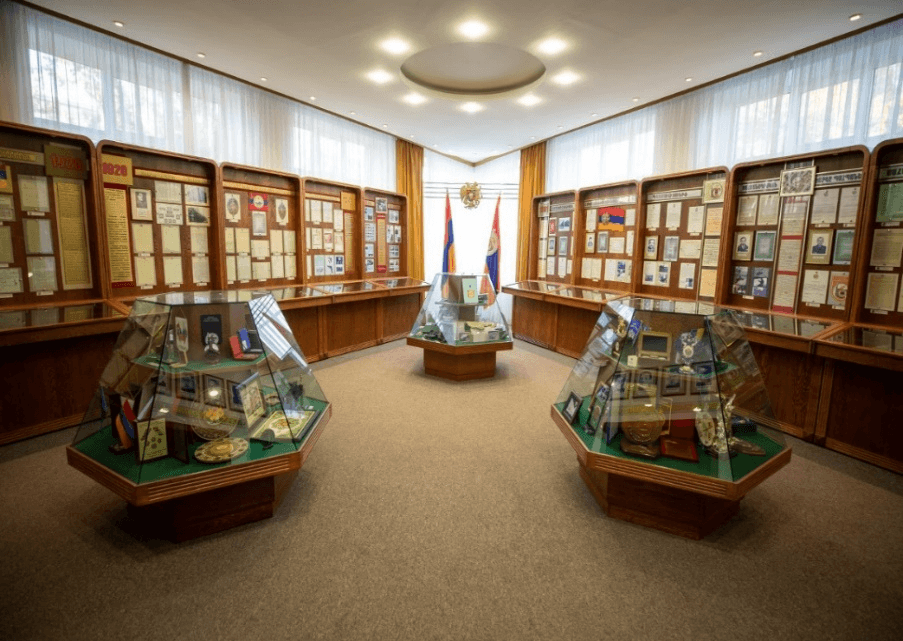
The Museum of the History of Armenia's Security Bodies was established in 2006 and is located in the administrative building of the National Security Service of the Republic of Armenia.
The Museum's mission is to collect, preserve, and systematically organize documentary and historical materials relating to the history, activities, achievements, and landmark events of Armenia's security bodies. It also seeks to facilitate scholarly research into these materials and promote public awareness of the history, professional heritage, and significant milestones of the security bodies.
The exhibition traces the history of security activities from Ancient Armenia through the period of the First Republic of Armenia and the Soviet era. It also highlights contemporary intelligence and counterintelligence activities, the protection of the constitutional order, the history of the Border Guard Troops, international cooperation, personnel training, and operational and technical units. The Museum's collection currently comprises more than 160 exhibits.
An important aspect of the Museum's activities is the organization of thematic exhibitions. Over the years, exhibitions have featured the participation of Armenian security personnel in the Great Patriotic War, achievements and landmark events during the years of independence, as well as archival materials documenting the activities of the special services of the First Republic of Armenia.
Based on these exhibitions, three historical publications have been released:
State Security Officers in World War II
The Invisible Pillar of the State: An Overview of the History of Armenia's Security Bodies
From the Heroic Legacy of Intelligence and Counterintelligence: Episodes from the History of the First Republic of Armenia
In collaboration with Public Television, films entitled The Invisible Pillar and Unknown Heroes were produced using the Museum's materials and expert consultations. In addition, a documentary series entitled Top Secret, comprising approximately ten films, was created.
The Museum's subject matter has also been featured in the television program Unknown Yerevan and in the 2023 documentary produced by the Press Center of the National Security Service, entitled Legendary Intelligence Officers: Gevorg and Gohar Vardanyan.
The Museum has also participated in initiatives aimed at promoting Armenia's historical heritage. In 2014, with the support of the Scientific and Educational Center and using materials provided by the Center, HayPost issued a series of postage stamps entitled Armenian Intelligence Officers. In 2018, the Museum hosted the ceremonial first-day cancellation of a commemorative postage stamp marking the 100th anniversary of the establishment of Armenian special services.
A particularly distinctive section of the exhibition is the display entitled Intelligence and Counterintelligence: The Armenian Connection, which presents the lives and professional activities of Armenian intelligence officers who carried out intelligence operations during the Soviet era. The exhibits include their personal belongings and photographs, some of which were donated to the Museum personally by the intelligence officers themselves or by their family members.
In recent years, the Museum's collection has also been enriched with commemorative gifts received within the framework of international cooperation. Throughout its years of operation, the Museum has welcomed delegations from partner intelligence and security services, government officials, distinguished scholars, journalists, students, and numerous other visitors
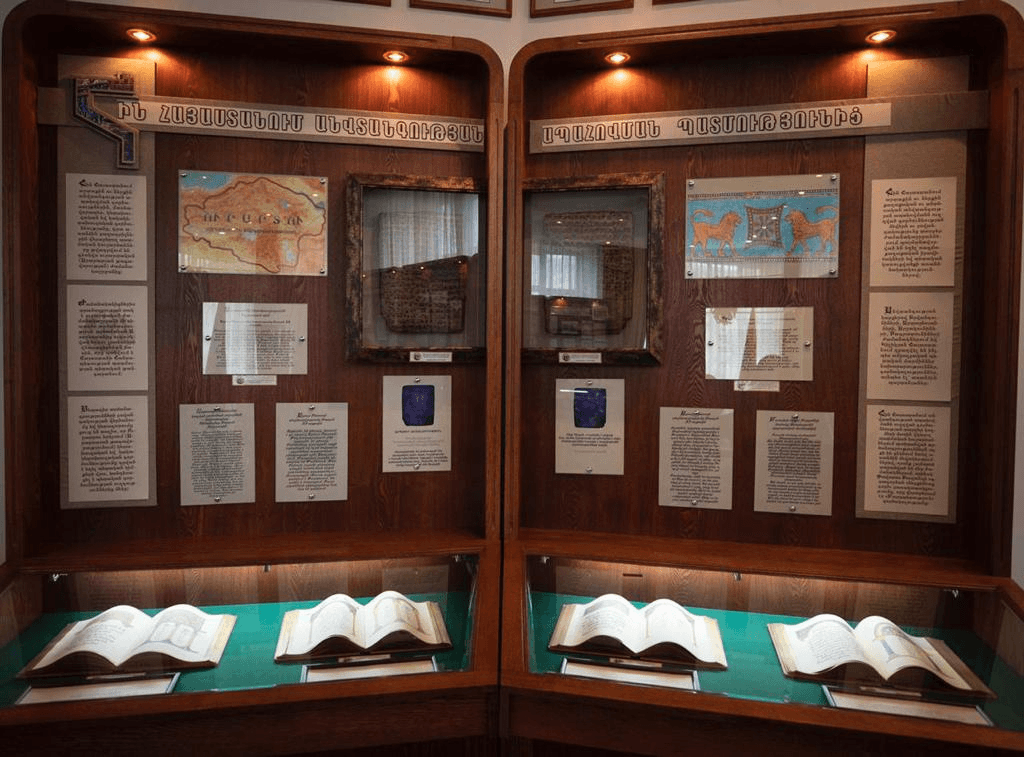
The display entitled “Security Activities in Ancient Armenia” presents the activities of institutions responsible for carrying out security functions in Ancient Armenia, historical accounts relating to this field, as well as relevant excerpts from the works of Armenian historians.
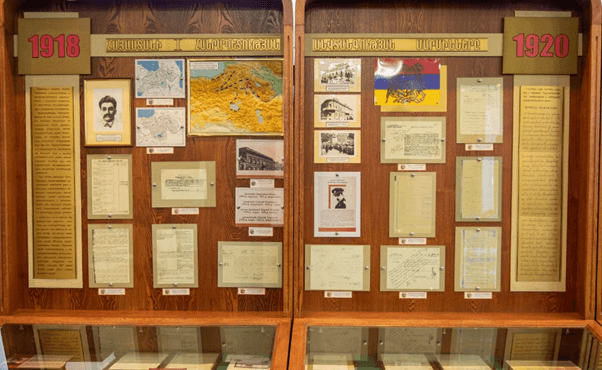
The display entitled “The Security Bodies of the First Republic of Armenia” presents the history and activities of the special services of the Republic of Armenia during 1918–1920, with particular emphasis on the establishment and operations of the Intelligence and Counterintelligence Division of the General Staff of the Ministry of Military Affairs of the Republic of Armenia.
The extensive documentary materials featured in the display testify that, despite the country's complex geopolitical, financial, economic, and military circumstances, the Division's relatively small personnel managed to carry out extensive work, gathering comprehensive and valuable intelligence on developments across the region.
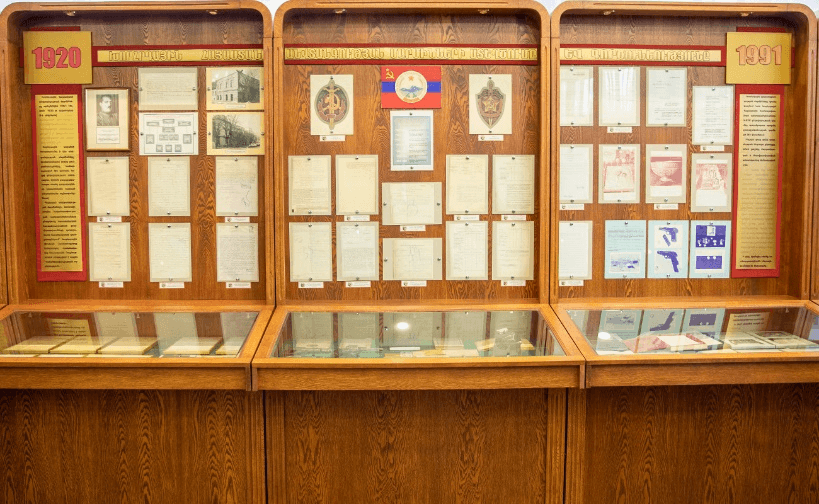
The display entitled “The Establishment and Activities of the Security Bodies of Soviet Armenia” presents the history of the formation and activities of the state security bodies of the Armenian Soviet Socialist Republic (Armenian SSR) from 1920 to 1991.
The exhibition features valuable archival documents and photographs, samples of firearms and equipment associated with espionage activities seized in the course of operational and intelligence operations, as well as materials relating to criminal cases that once attracted widespread public attention.
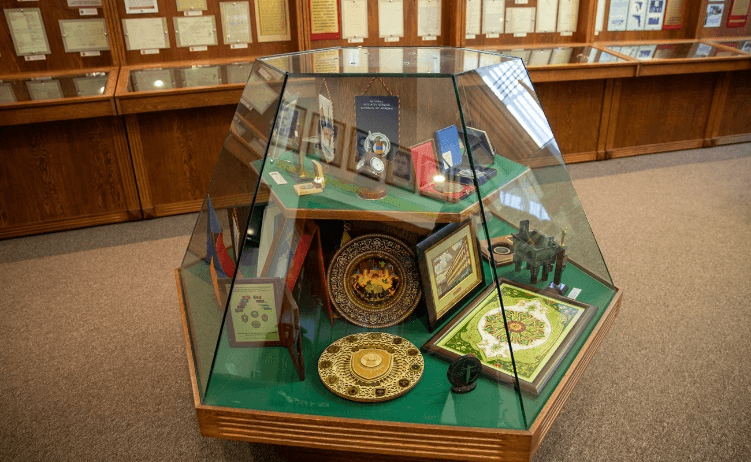
The two display cases entitled “Highlights from Ceremonial Events and International Meetings” feature gifts, valuable items, certificates of merit, letters of appreciation, and congratulatory messages.
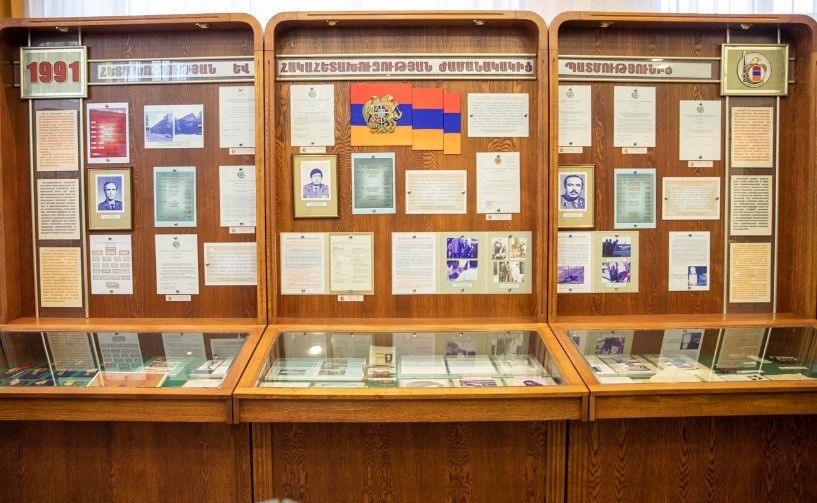
The displays entitled “From the Recent History of Intelligence and Counterintelligence” present the history of the establishment and activities of the national security bodies of the Republic of Armenia following the declaration of independence on September 21, 1991, with particular emphasis on the intelligence, counterintelligence, and military counterintelligence units.
The exhibition features archival documents and photographs, as well as notable materials relating to criminal cases initiated over the past decades involving treason, espionage, the illicit trafficking of radioactive materials and counterfeit banknotes, and smuggling.
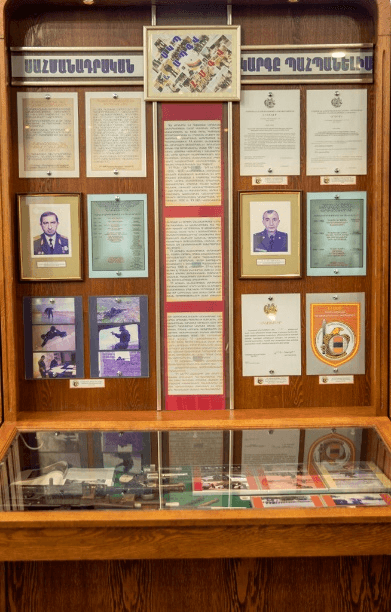
The display entitled “Activities Aimed at Safeguarding the Constitutional Order” presents the history and activities of the Main Directorate for the Protection of the Constitutional Order and Combating Terrorism, as well as the establishment and operations of Unit “A,” responsible for conducting operational and combat missions.
The exhibition features samples of factory-produced and improvised firearms and ammunition seized in the course of the Unit's operations, as well as photographs documenting its training exercises and practical drills.
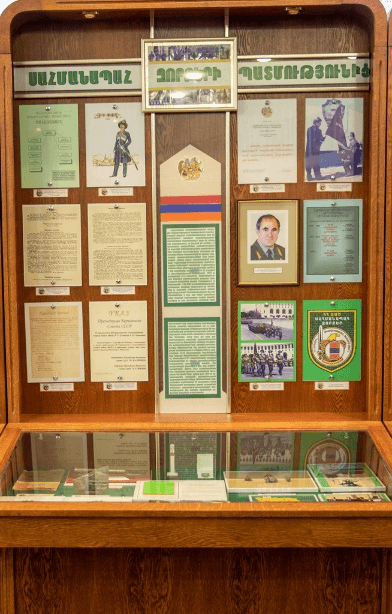
The display entitled “From the History of the Border Guard Troops” features materials documenting the establishment and activities of the Border Guard Troops. It includes photographs depicting training exercises, the ceremonial opening of the Training Center, as well as border outposts and military parades. The exhibition also features commemorative items donated to the Museum by border guard outposts.
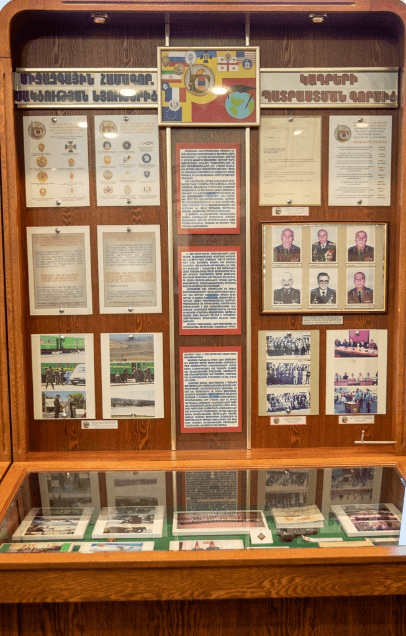
The displays entitled “Materials on International Cooperation” and “From the Recent History of Personnel Training and Scientific and Educational Activities” feature photographs documenting meetings and various forms of cooperation with partner intelligence and security services, as well as materials highlighting the establishment and development of the Scientific and Educational Center.
The exhibition also includes selected memoirs written in recent years by veterans of the national security system, along with personal belongings donated to the Museum by the veterans themselves.
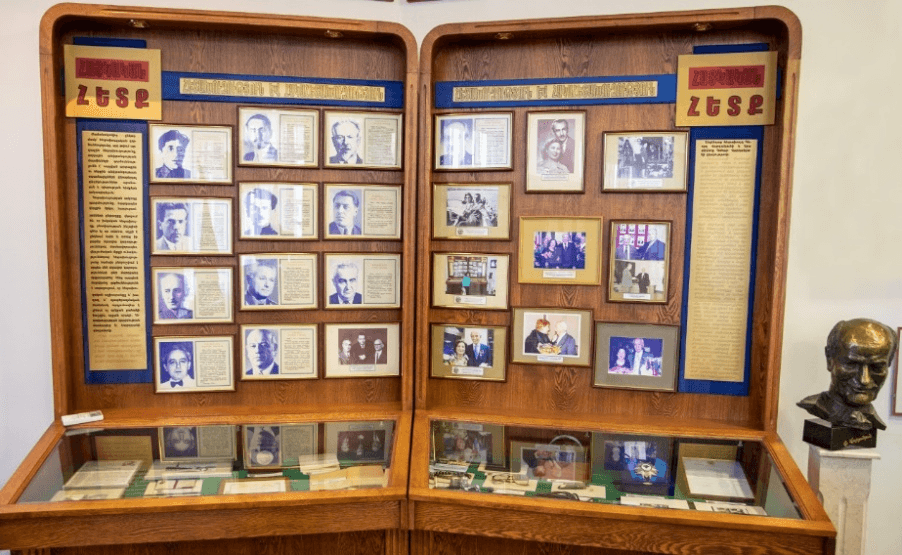
The display entitled “Intelligence and Counterintelligence: The Armenian Connection” is dedicated to prominent Armenian intelligence and counterintelligence officers who served during the Soviet era. It features their photographs, biographical information, personal belongings, and archival documents.
Special prominence is given to the life and professional activities of Hero of the Soviet Union Gevorg Vardanyan and his wife, Gohar Vardanyan. The exhibition also showcases personal items donated to the Museum by the Vardanyans, which accompanied them throughout their 46-year intelligence careers.
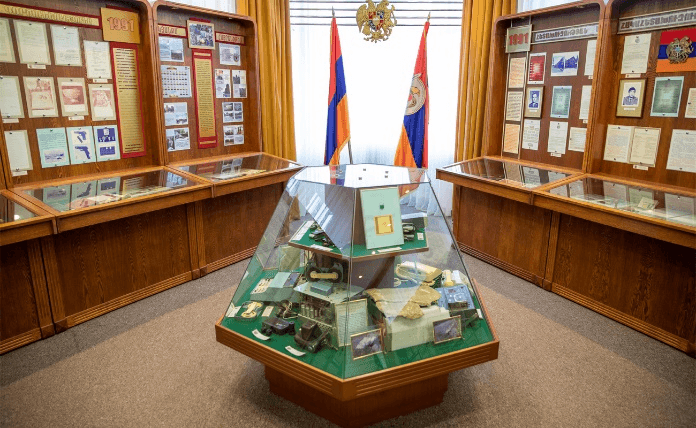
The display entitled “From the History of Operational and Technical Units” features samples of operational and technical equipment used by these units, primarily dating from the Soviet era. The exhibits include photographic and video recording equipment, telephones, as well as encryption and decryption devices.